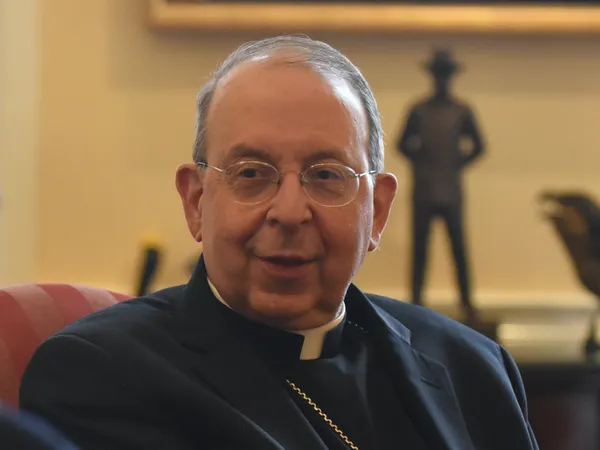
Baltimore Archbishop William E. Lori urges civic renewal in pastoral letter ahead of America’s 250th anniversary
A pastoral appeal aimed at political culture, not partisan outcomes
Baltimore Archbishop William E. Lori has released a new pastoral letter calling for a “renewed political culture,” framing the nation’s approaching 250th anniversary of the Declaration of Independence as a moment for reflection as well as celebration. The letter, titled In Charity & Truth: Toward a Renewed Political Culture, was issued Feb. 9, 2026, and positions civic polarization as a challenge that extends beyond institutions into habits, language, and moral formation.
The document explicitly rejects the idea of functioning as a voting guide or a policy platform. Instead, it argues that political health depends on the virtues and dispositions citizens bring to public life, especially when faced with deep disagreement.
Diagnosing polarization and its consequences
The letter describes the current civic environment as “toxic,” citing intensified vitriol in public discourse, entrenched polarization, and the emergence of political violence and threats. It warns that when citizens lose a shared sense of one another’s dignity, political life can shift from pursuing the common good to seeking power over opponents.
Anniversaries, the archbishop writes, can encourage selective memory—celebrating ideals while avoiding failures. He urges acknowledgment of both national achievements and national wounds, arguing that renewal requires facing strengths and shortcomings without romanticizing the past.
“Synodality” as a model for civic habits
A central theme is “synodality,” a Catholic term associated with communal listening and discernment. While the letter does not present Church governance as a blueprint for government, it proposes that a synodal spirit offers practical habits that can stabilize democratic life: listening to those with whom one disagrees, refusing to demonize, avoiding ideological rigidity, and resisting fragmentation.
The text argues that disagreement is inevitable in pluralistic societies, but contends that civic relationships deteriorate when opponents are treated as enemies rather than as neighbors with equal human dignity.
A framework built around dignity, encounter, and virtue
The letter calls for a “new kind of politics” grounded in an account of the human person and the inviolable dignity of every human life “from conception to natural death.” It urges protection of vulnerable and marginalized people, dialogue rather than accusation, and prioritizing the common good over partisan loyalty.
It also highlights four classical virtues—prudence, justice, fortitude, and temperance—as civic tools for navigating conflict without abandoning moral responsibility. The document ties these virtues to what it calls “civic friendship,” described as the social trust needed for democracy to withstand sharp disagreements.
Practical commitments proposed in the letter
- Listen seriously to people across lines of disagreement and resist demonization.
- Reject political violence and intimidation, including threats that corrode public trust.
- Defend human life and advocate for the poor and vulnerable as core civic responsibilities.
- Insist on racial and social justice, promote peace, and uphold religious freedom for all.
Throughout, the letter’s recurring claim is that durable political reform cannot be separated from moral formation—an appeal aimed at citizens’ conduct and character as much as at leaders or institutions.