Baltimore outlines multi-park strategy to curb deer overpopulation and protect forests, safety in neighborhoods
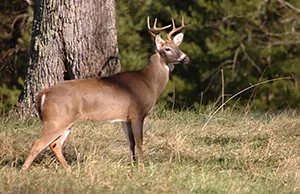
Deer numbers rising across major Baltimore parks
Baltimore recreation and forestry officials have begun rolling out a citywide deer management initiative focused on seven parks where white-tailed deer populations have been measured at levels officials say are damaging forest regeneration and increasing conflicts in nearby neighborhoods.
The initial focus areas are Gwynns Falls/Leakin Park, Powder Mill Park, Hanlon Park, Herring Run Park, Druid Hill Park, Farring Baybrook Park, and Moore’s Run Park. City staff describe the effort as Baltimore’s first coordinated deer program aimed at reducing impacts on park forests, limiting deer-human conflicts, and formalizing a process for resident participation in decision-making.
What the city’s counts show
Thermal-imaging surveys conducted along established routes in early 2025 produced park-by-park density estimates that city officials are using as a baseline. In Druid Hill Park, the city’s count rose from 70 deer in 2015 to 115 in 2025, an increase of about 64%, translating to roughly 121 deer per square mile in 2025. Gwynns Falls/Leakin Park was counted at 134 deer in 2025 compared with 102 in 2015, with a 2025 density of about 86 deer per square mile.
Some smaller parks posted higher densities. Powder Mill Park was estimated at roughly 265 deer per square mile, while Hanlon Park was estimated at roughly 188 deer per square mile. Officials have said the city will continue annual counts between October and March to track changes over time.
Forest health and neighborhood impacts
Officials cite overbrowsing as a central driver of ecological decline in Baltimore’s urban forests, with tree seedlings and understory plants consumed before they can mature. In affected areas, the lack of young growth can leave forests without the next generation of trees. City staff also point to a related shift toward invasive and non-native plants that deer tend to avoid, including wineberries and Japanese stiltgrass, which can spread quickly when native plants decline.
In resident feedback collected through city outreach, common concerns identified by officials include damage to landscaping and garden plants and deer-vehicle collisions. The program’s broader stated objectives include environmental resilience and safer access to healthy green space.
Options under review, with public input built into the timeline
The city has described a menu of tools under evaluation, spanning both lethal and non-lethal approaches. Strategies discussed by officials include precision sharpshooting, controlled hunting and traditional hunting where feasible, deer exclusion areas, and repellents. City staff have said they are pairing field data with community engagement to determine what approaches are acceptable and workable in each location.
- Resident survey and early community outreach: summer 2025
- Public information sessions and focus groups: mid-to-late summer 2025
- Development of a city deer management plan: September to December 2025
- Annual deer counts: October through March each year
Fencing demonstrations and a target benchmark
Officials have pointed to fenced deer-exclusion plots as a way to demonstrate how quickly vegetation can rebound when browsing pressure is removed. The city has also described plans for a larger, approximately 15-acre forest restoration enclosure in Gwynns Falls/Leakin Park using 10-foot-high woven wire fencing designed to exclude deer and withstand storm debris.
As the program develops, the city has identified a benchmark goal of 20 deer per square mile or fewer as a level intended to support forest regeneration while sustaining a deer population within park ecosystems.
Officials say the next phase will center on selecting site-specific methods for each park and setting measurable targets tied to annual monitoring.