Baltimore’s population holds near flat as Maryland’s Eastern Shore counties post strongest Census gains
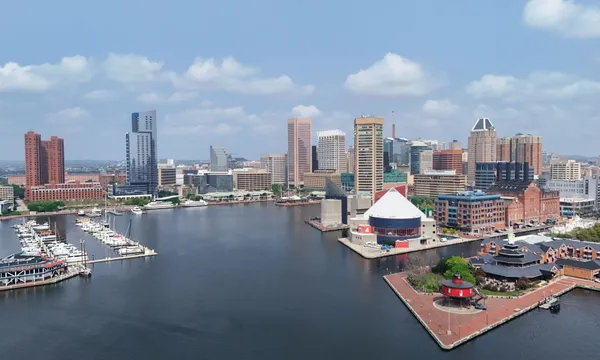
Latest Census estimates show uneven growth across Maryland
Baltimore City’s population changed little in the most recent U.S. Census Bureau annual estimates, while several counties on Maryland’s Eastern Shore recorded some of the state’s fastest growth. The figures are part of the Census Bureau’s Population Estimates Program, which updates population counts each year using births, deaths, and migration flows anchored to the 2020 decennial census.
For the period from July 1, 2023, to July 1, 2024, Baltimore City added an estimated 754 residents, bringing the city’s population to about 568,271. The year-over-year change—about one-tenth of one percent—marked a rare pause in a longer-term downward trend that has defined Baltimore’s post-2010 demographic trajectory.
Eastern Shore counties led Maryland in percentage increases
Across Maryland, the strongest percentage gains were concentrated in smaller jurisdictions, particularly on the Eastern Shore. Queen Anne’s County stood out as the state’s top performer for 2023–2024 percentage growth, rising by roughly 1.9% over the year. Over a longer window—from the 2020 census base to July 1, 2024—Queen Anne’s County increased by about 7.6%.
State-level summaries also show modest but consistent growth in several counties adjacent to Baltimore and along key commuting corridors. In the Baltimore metropolitan region, county growth rates for 2023–2024 were measured in tenths of a percent in several places, with Howard County higher than neighboring jurisdictions and Queen Anne’s County markedly above the region’s typical annual pace.
Maryland’s growth continues to hinge on migration
Recent population accounting for Maryland indicates that migration has been a central driver of net gains, with international arrivals in particular offsetting domestic outflows in some jurisdictions. In Baltimore City, the annual estimate reflects a dynamic where population losses through domestic moves were counterbalanced by other components of change, resulting in a small net increase.
Annual population estimates are based on the 2020 census and updated each year using births, deaths, and migration.
What the numbers can—and cannot—tell
The estimates provide a consistent year-to-year snapshot but are not a full substitute for the decennial census. They are best read as indicators of direction and relative momentum across jurisdictions rather than precise headcounts at a neighborhood level.
- Baltimore City: about 568,271 residents as of July 1, 2024; up roughly 754 from July 2023.
- Queen Anne’s County: fastest percentage growth in Maryland for 2023–2024 (about 1.9%).
- Eastern Shore: multiple counties among the state’s stronger percentage gainers in recent estimates.
As Maryland’s population shifts, the newest estimates underline a familiar pattern: larger jurisdictions often move slowly in percentage terms, while smaller counties can post sharper growth rates—particularly when housing and migration patterns change over short periods.