Downtown Baltimore storefront vacancies test small businesses as landlords, lenders, and city programs seek new tenants
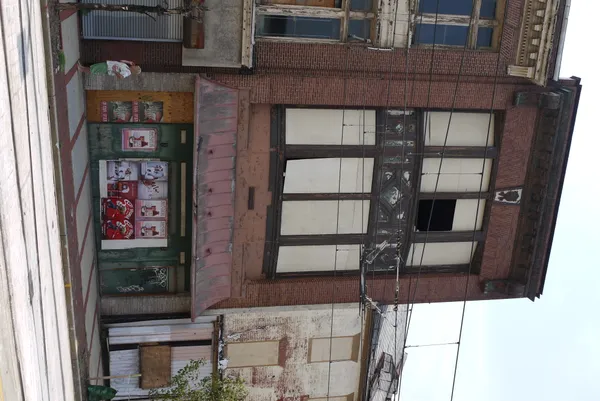
A downtown retail market still searching for stable foot traffic
Across Downtown Baltimore, entrepreneurs attempting to open or sustain street-level businesses are colliding with a difficult mix of high fixed costs, uneven pedestrian activity, and a commercial real estate market still adjusting to post-pandemic work patterns. The result has been a visible churn of “for lease” storefronts in the central business district and around major visitor corridors, even as the city and private partners pursue vacancy-activation programs designed to bring new operators into empty spaces.
Commercial real estate indicators underscore the broader environment. Regional office vacancies remained elevated at the end of 2025, extending a multiyear trend that has reduced the weekday customer base that many retailers historically relied on. Brokers and downtown stakeholders have also pointed to persistently high vacancy levels within the central business district, with incremental improvement year over year but no rapid reversal.
Why small operators say the math is hard
For independent businesses, downtown economics often hinge on narrow margins: rent, utilities, insurance, payroll, and debt service arrive on schedule regardless of daily sales. When surrounding buildings have fewer office workers than in prior years, or when adjacent storefronts sit dark, the compounding effect can reduce walk-in traffic and weaken the case for additional private investment in buildouts.
Tenant improvements can require significant up-front capital before opening day.
Traditional retail leases may demand multi-year commitments that are difficult for young businesses to underwrite.
Vacancies on a block can suppress foot traffic, reducing the odds that a new shop reaches break-even quickly.
Programs aimed at filling empty storefronts
Downtown Baltimore has also become a testing ground for targeted interventions. The Downtown BOOST program—structured as a cohort model with grant funding and technical assistance—has been positioned to help minority-owned businesses transition into vacant retail spaces. Recent program updates indicate an additional cohort is under review, continuing an approach intended to pair capital support with operational coaching.
Separately, a vacancy-activation effort tied to creative and culinary uses has moved forward near City Hall, where plans have been advanced to convert dormant retail bays into a commissary kitchen for multiple culinary entrepreneurs and adjacent artist studio space. The concept is to lower barriers for early-stage operators by sharing infrastructure while generating regular activity at street level.
Large-scale redevelopment uncertainty around the Inner Harbor
Downtown retail conditions are also influenced by the long transition at Harborplace, a marquee Inner Harbor complex that has been largely vacant in recent years and is slated for major redevelopment. With a key tourist hub in flux, entrepreneurs in nearby corridors have faced uncertainty about timing, construction impacts, and the return of consistent visitor flows.
Downtown revitalization strategies increasingly depend on aligning property owners, financing, and public programs to reduce the risk of opening new storefront businesses.
What to watch next
In the near term, downtown’s storefront recovery is likely to be shaped by how quickly vacant spaces can be repositioned for new uses, how flexible landlords become on lease terms and buildout support, and whether office occupancy stabilizes enough to rebuild dependable weekday demand. For entrepreneurs, the core question remains whether the customer base and the cost structure can meet in the middle before cash reserves run out.