Kennedy Krieger Institute expands healing-art efforts in Maryland through KaleidoHOPE and school-based therapies for students
A hospital-based art initiative with a statewide footprint
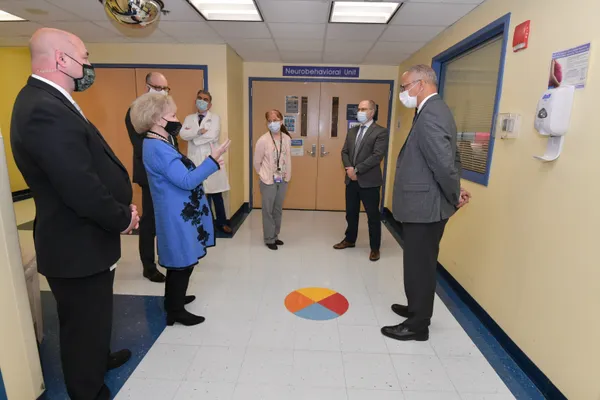
Kennedy Krieger Institute, a Baltimore-based nonprofit specializing in care and education for people with neurological and developmental conditions, has broadened its public-facing arts programming through KaleidoHOPE, a healing-art initiative designed to bring original artwork into clinical settings. The program invites artists to contribute works across multiple media for display within the institute’s hospital environment, with the stated goal of creating spaces that support comfort and well-being for patients, families, and staff.
The effort is part of a wider continuum of services at Kennedy Krieger, which operates across patient care, special education, research, professional training, and community programs. The institute reports serving nearly 30,000 patients and students annually across numerous sites in the Baltimore–Washington region.
How art intersects with clinical and educational services
Within Kennedy Krieger’s school programs—nonpublic special education settings approved by the Maryland State Department of Education and accredited by the National Commission for the Accreditation of Special Education Services—arts-related supports appear in both instruction and therapeutic services. Program descriptions for the institute’s Greenspring Campus high school and LEAP program include art and music therapy among staff specialties, alongside disciplines such as speech-language pathology, counseling, and behavioral supports.
In these settings, creative work functions in two overlapping ways: as part of a comprehensive curriculum (including art and music instruction) and as a therapeutic modality integrated into individualized educational planning and broader interdisciplinary care.
- KaleidoHOPE focuses on transforming clinical spaces through curated, on-site artwork.
- School programs list art and music therapy as part of their related services and support teams.
- Accreditation standards frame these services within structured special education operations and documented practices.
Arts integration in classrooms and staff development
Kennedy Krieger also describes arts integration as an instructional strategy, including professional development and teacher coaching intended to help incorporate artistic methods into academic learning. This approach is positioned as part of a broader effort to support students with complex needs using multiple pathways for engagement and communication.
Across medical and school settings, the institute’s arts-related programming is presented as a complement to clinical, educational, and behavioral interventions rather than a standalone activity.
What is known, and what remains unclear
Public program materials outline the structure and intent of KaleidoHOPE and confirm that art and music therapy are embedded within the institute’s school-based supports. However, details typically central to evaluating impact—such as the volume of works installed, patient participation rates, clinical outcomes tied to the environment, or independent assessments—are not provided in the publicly available descriptions reviewed for this report.
Still, the combination of a hospital-display initiative and therapy-inclusive school programs highlights how one Maryland institution is formalizing the role of arts in environments designed for treatment and specialized education.