Key Bridge Shipping Channel Reopening Helps Port of Baltimore Set New Records for Vessel Visits
A port recovery milestone after the March 2024 collapse
The Port of Baltimore’s latest operating records are closely tied to the restoration of full maritime access following the collapse of the Francis Scott Key Bridge on March 26, 2024, when the cargo vessel Dali struck a bridge support and brought the span down into the Patapsco River. The disaster blocked the Fort McHenry Federal Channel, disrupting vessel traffic and temporarily constraining major terminal operations across the harbor.
Full two-way commercial transit through the channel resumed on June 10, 2024, when the channel was restored to its standard dimensions of 700 feet wide and 50 feet deep. The reopening followed a debris-removal operation that cleared more than 50,000 tons of steel and concrete from the river and proceeded in phases, with partial channels opening before full restoration.
Record vessel visits in 2025 as traffic normalized and expanded
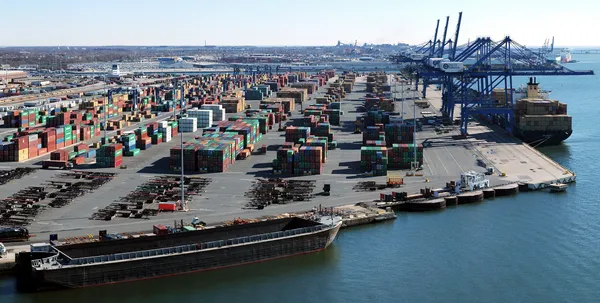
Maryland port officials report that 2025 brought a new high in cargo vessel activity across the Port of Baltimore’s state-owned public terminals and private terminals, totaling 2,223 cargo vessel visits. That surpassed the previous record of 2,137 set in 2023 and marked a 21% increase over 2024.
Container activity at Seagirt Marine Terminal also reached a new benchmark. The terminal moved 1,113,309 twenty-foot equivalent units (TEUs) in 2025, exceeding the 2023 record by more than 5,000 TEUs. Seagirt also recorded 689 ship calls in 2025, nearly 100 more than the prior record set in 2023.
- 2,223 cargo vessel visits across public and private terminals in 2025 (new record)
- 689 ship calls at Seagirt Marine Terminal in 2025 (new record)
- 1,113,309 TEUs moved at Seagirt in 2025 (new record)
Service frequency and logistics capacity remain central to growth
Port officials attribute part of the container increase to expanded scheduled service. Weekly container services rose from 12 in 2024 to 15 in 2025, improving route regularity for shippers and supporting higher throughput at Seagirt.
On the landside, freight rail capacity is positioned to play a larger role as the Howard Street Tunnel modernization reaches operational readiness. The tunnel project is designed to support double-stack intermodal trains through Baltimore, removing a long-standing clearance constraint on a key East Coast freight corridor. CSX has stated the tunnel work is complete, while related bridge and clearance projects north of the tunnel are expected to finish in early 2026.
With full channel dimensions restored in 2024 and higher vessel activity recorded in 2025, Baltimore’s port recovery has shifted from reopening logistics to capacity expansion across maritime and rail connections.
What the numbers signal for 2026 planning
The new vessel-visit and ship-call totals underscore how quickly port operations rebounded once navigation limits were lifted. For terminal operators, labor, trucking, and logistics firms, the 2025 figures provide a measurable baseline for planning equipment, berth utilization, and intermodal transfers in 2026—particularly as rail clearance improvements come online and as carriers evaluate East Coast routings that depend on reliable channel access.