Martin Luther King Jr.’s 1964 Baltimore visit mixed clergy strategy talks and a high-security public rally
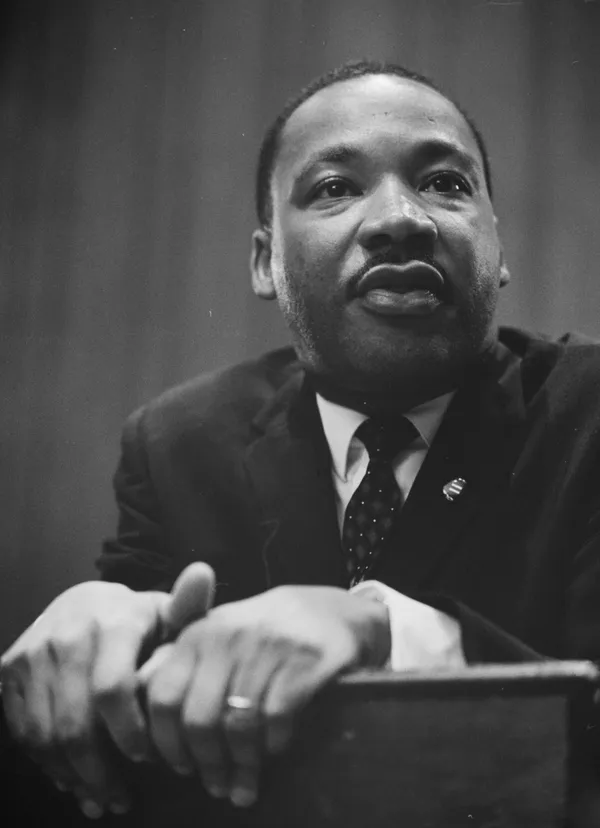
A campaign-season stop in Baltimore
In late October 1964, the Rev. Dr. Martin Luther King Jr. made a brief, tightly scheduled visit to Baltimore as part of a broader push to encourage Black voter participation ahead of the Nov. 3, 1964, presidential election. The trip unfolded against a national backdrop defined by the recent passage of the Civil Rights Act of 1964 and an election that sharply divided the country over civil rights enforcement and the federal government’s role in guaranteeing equal access to public life.
Meetings with ministers and a message focused on nonviolence
King’s Baltimore itinerary included a meeting with local clergy at Faith Baptist Church, where he delivered remarks that drew on themes he had used repeatedly in 1963 and 1964: nonviolent political action, the moral urgency of dismantling segregation, and the need for durable coalitions that could translate protest into policy and voter turnout.
Accounts from the period describe him revisiting elements associated with his nationally known “dream” imagery, which had become emblematic after the Aug. 28, 1963, March on Washington for Jobs and Freedom. In Baltimore, the language served a practical purpose: reinforcing unity among ministers and community leaders operating within a high-stakes election environment.
A motorcade and a packed public gathering downtown
After the clergy meeting, King traveled in a police-escorted motorcade to the Masonic Temple on North Eutaw Street. There, he appeared at a public program that drew an overflow crowd reported at roughly 1,500 people. The event also featured other prominent figures, including Baltimore Mayor Theodore McKeldin and the Rev. Ralph Abernathy, a leading organizer in the Southern Christian Leadership Conference.
The security and staging reflected both King’s prominence and the tensions of the era. By 1964, King was a nationally recognized leader whose travel often required careful coordination with local authorities, while local venues hosting him weighed crowd size, safety and the political sensitivity surrounding civil rights advocacy.
Political context: voting rights, civil rights enforcement, and campaign rhetoric
King’s Baltimore stop came as civil rights leaders pressed to convert legal change into lived reality. The Civil Rights Act had outlawed segregation in public accommodations and barred employment discrimination, but enforcement depended on federal action, local compliance, and sustained civic pressure. In that context, voter participation was treated as an essential lever for safeguarding—and extending—newly won rights.
Reports from the visit also recorded King addressing the political stakes directly. While he did not frame his trip as a formal campaign endorsement, his public remarks included criticism of the Republican nominee, Sen. Barry Goldwater, in language that underscored the movement’s concern that civil rights gains could be rolled back through national leadership choices.
Why the 1964 visit remains part of Baltimore’s civil rights memory
King had longstanding ties to Baltimore through earlier appearances, including a 1958 commencement address at Morgan State College. The 1964 visit, however, stands out for combining strategy with spectacle: a private session with clergy, a high-profile public rally, and an explicitly election-timed message about civic power.
It linked local faith leadership to a national organizing network.
It underscored voting as a central civil rights tactic after passage of landmark federal law.
It illustrated how major civil rights events were increasingly shaped by security concerns and mass turnout logistics.
King’s Baltimore appearance in 1964 was built around a core premise of the movement: legal victories mattered, but political participation would determine whether those victories endured.