Maryland Agencies Investigate Lead Paint Flakes Falling From Baltimore Bridges, Ordering Cleanup and Testing Expansion
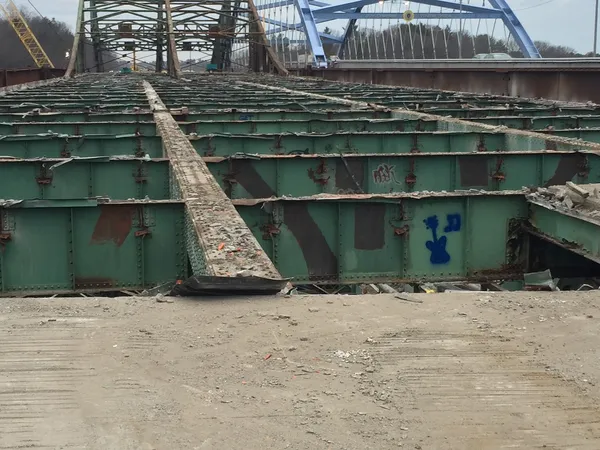
Lead-containing paint chips prompt enforcement actions and wider inspections
State environmental regulators and local transportation officials are responding to reports that paint flakes containing elevated levels of lead are falling from multiple Baltimore-area bridges, contaminating streets, sidewalks, storm drains and waterways. The issue first drew attention beneath the West 28th Street Bridge, where debris was found on Falls Road, along the Jones Falls Trail and in the Jones Falls stream.
In a state inspection of the area below the 28th Street Bridge, regulators documented paint chips ranging from tiny fragments to pieces roughly 10 inches across, spread for about 200 feet under the span and visible along stream banks and in the water. Laboratory results cited in state documentation found lead concentrations in a sampled flake at 36 times the threshold level used for paint chips. The state determined the bridge owner was in violation of Maryland pollution laws and directed removal of the debris and steps to prevent additional releases.
Additional bridges added to the inquiry
Since the 28th Street findings, two more Baltimore-area bridge locations have been flagged for investigation and sampling amid concerns that similar orange paint chips may be entering drainage infrastructure and nearby neighborhoods. One location under review is the Orleans Street viaduct area, where paint deterioration has been observed beneath the structure and flakes have been reported near grass and pavement adjacent to the roadway.
Another site involves an overpass near Arbutus Avenue in the Halethorpe area, where paint chips have been reported near roadway edges, grassy areas and around storm drain inlets. State environmental officials have indicated they are investigating that site and have said they believe the bridge is owned by the Maryland State Highway Administration. In this case, regulators have emphasized that bridge ownership determines responsibility for testing, cleanup and compliance actions.
Cleanup orders, hazardous-waste handling and potential penalties
State directives tied to the cases include removing paint chips from the ground and from storm drain inlets to reduce the risk of pollutants being carried into waterways. In at least one enforcement communication related to the newer reports, regulators instructed that the material should be managed as hazardous waste unless testing demonstrates the absence of lead.
Regulators have also warned that violations may carry daily penalties while contamination remains unaddressed, though public documentation reviewed by this newsroom did not specify fine amounts.
What officials say will happen next
City leadership has said contractors are being engaged to conduct cleanup at affected sites and that surrounding bridges will be proactively tested for lead paint. At the state level, environmental officials have said they are continuing investigations, while also directing bridge owners to conduct testing where ownership and maintenance responsibilities fall outside the state agency’s direct control.
- Primary confirmed concern: lead-containing paint chips beneath the West 28th Street Bridge affecting Falls Road and the Jones Falls corridor.
- Expanding scope: additional bridge locations under investigation, including areas near the Orleans Street viaduct and an overpass near Arbutus Avenue in Halethorpe.
- Key compliance focus: debris removal, storm-drain protection, and hazardous-waste handling unless testing shows no lead.
Public health and environmental impacts remain central to the response as testing expands and agencies determine the extent of contamination and the responsibilities of bridge owners.