Maryland Attorney General Brown sues ICE and DHS over subpoena seeking records tied to Baltimore hold rooms
Legal clash centers on demands for information about short-term detention space in downtown Baltimore
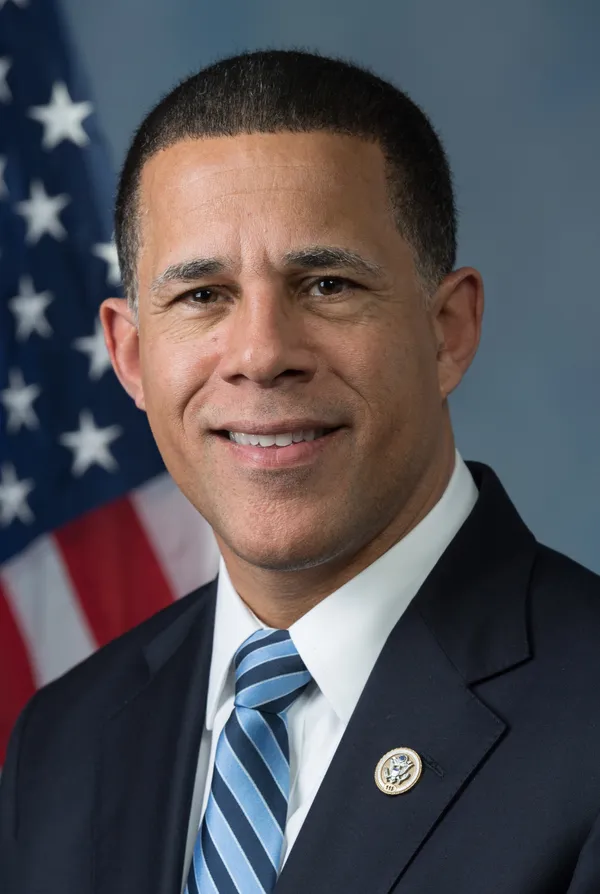
Maryland Attorney General Anthony G. Brown has filed suit against U.S. Immigration and Customs Enforcement and the Department of Homeland Security, challenging a subpoena seeking records connected to the agency’s Baltimore “hold rooms,” a set of temporary detention cells inside the George H. Fallon Federal Building at 31 Hopkins Plaza.
The lawsuit places a new spotlight on the Baltimore holding area, which has been the subject of escalating legal and political scrutiny over how long people are kept there and what conditions they face while awaiting immigration proceedings or transfers. The Baltimore Field Office is the region’s primary ICE check-in and operations site for Maryland.
Background: federal court order governing conditions and capacity
The dispute comes days after a federal judge in the U.S. District Court for the District of Maryland issued a preliminary injunction establishing enforceable requirements for how detainees may be held in the Baltimore hold rooms. The court also certified a class covering people currently held there and those who may be detained there in the future.
In addition to mandating baseline conditions, the order addressed crowding by restricting how many people may be held and by setting space, cleanliness, hygiene, and medical-screening requirements. The underlying federal case was filed in May 2025 and has centered on allegations that the Baltimore hold rooms were used for extended stays despite being designed for short-term detention.
What the new lawsuit is about
Brown’s suit challenges the legality and scope of the subpoena directed at records involving the Baltimore hold rooms. While the parties have not publicly released a complete inventory of the materials sought, the case frames the subpoena as an attempt to compel production of information that Maryland argues is protected, improper to demand, or otherwise unlawful to obtain through the mechanism used.
Federal agencies including DHS and ICE have broad investigative and administrative tools, but subpoena authority and enforceability depend on statutory limits, procedural requirements, and judicial oversight when disputes arise. Maryland’s case effectively asks the court to determine whether the subpoena at issue is valid and whether compliance can be compelled.
Why the records matter
Records related to the Baltimore hold rooms can bear directly on key questions now under judicial supervision: how many people are held there, for how long, under what conditions, and what practices govern screening, medical care, food, sanitation, and access to counsel.
- Duration of confinement versus short-term design constraints
- Maximum occupancy and square-footage requirements
- Documentation of cleaning, hygiene supplies, and medical checks
- Policies governing transfers to longer-term detention facilities
What happens next
The lawsuit will proceed in federal court on a schedule set by the judge, typically beginning with briefing on jurisdiction and the subpoena’s enforceability. The case is unfolding alongside ongoing litigation over conditions in the hold rooms, meaning multiple courts may be evaluating overlapping factual and procedural issues involving ICE operations in Baltimore.
The outcome will determine whether the subpoena stands, is narrowed, or is blocked, and it may shape how information about hold-room operations is obtained and used in related proceedings.