Maryland congresswoman returns to Baltimore ICE holding site as court scrutiny and oversight fight intensify
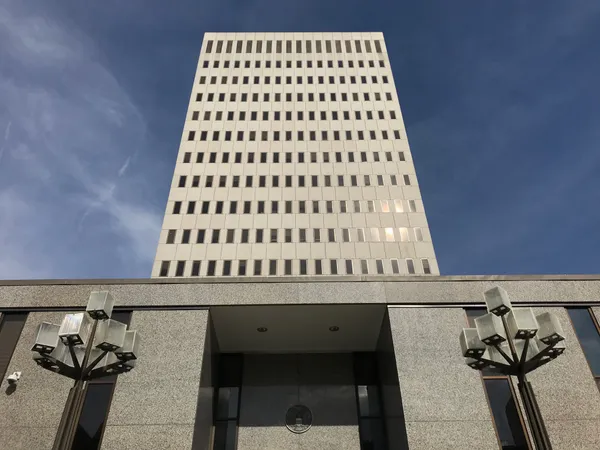
A renewed push for access inside a downtown federal building
A Maryland member of Congress made another trip to the U.S. Immigration and Customs Enforcement (ICE) site in downtown Baltimore as federal courts, lawmakers and immigration advocates continue to focus on conditions and oversight at the agency’s Baltimore operation.
The site is located in the George H. Fallon Federal Building at 31 Hopkins Plaza, a complex that also houses federal offices including the Baltimore Immigration Court. ICE has described its Baltimore operation as a field office that includes “holding rooms,” a distinction that has become central to a broader dispute about what standards apply and what level of congressional access is required.
What lawmakers say they have seen during recent visits
In recent months, multiple members of Maryland’s congressional delegation have made unannounced or short-notice visits connected to oversight of immigration enforcement and custody practices in Baltimore. Some visits resulted in entry, while others did not, reflecting shifting on-the-ground conditions and evolving federal policies around access.
During a Feb. 12, 2026, visit, Rep. Jamie Raskin said he was allowed inside and reported seeing 134 people held in crowded spaces. Earlier attempts by other lawmakers to tour the Baltimore operation have ended without access, including a visit by Rep. April McClain Delaney that did not result in a tour when detainees were being transferred.
Feb. 12, 2026: a member of Congress reported being granted access and described overcrowded conditions.
March 9, 2026: members of Maryland’s delegation conducted an unannounced visit and publicly described overcrowding and limited space inside the holding area.
Other attempted visits in 2025 and 2026 have been delayed or denied, fueling an ongoing dispute over oversight authority.
Federal court action places conditions in the spotlight
The renewed attention to the Baltimore site has unfolded alongside litigation over two related issues: conditions in ICE custody and the rules governing congressional entry into facilities used to detain or house people. Lawmakers have argued that federal law provides them authority to conduct oversight visits without advance notice at facilities used for detention or housing.
Separately, a Baltimore-area court order in early March 2026 addressed overcrowding concerns at the Fallon Building holding area. On March 9, 2026, members of the Maryland delegation said the facility had held more than 225 people despite a claimed capacity of 55, describing the conditions as unsafe and degrading. The visit followed a recent judicial finding that the facility was overcrowded.
Why “field office” versus “detention facility” matters
ICE and lawmakers have been in conflict over whether the Baltimore operation should be treated as a detention facility subject to detention standards, or as a field office with temporary holding space. That classification affects both operational expectations and the legal arguments about oversight access.
At the center of the dispute is whether the holding rooms are being used for short stays consistent with their design, or for longer periods that resemble detention.
What happens next
The congresswoman’s return visit comes as oversight litigation and court scrutiny continue. The practical question remains whether ICE can maintain custody operations at the Baltimore site without overcrowding, while also accommodating congressional inspections that lawmakers say are necessary to evaluate conditions, medical access, hygiene provisions and the length of time people are held before transfer or release.
For Baltimore, the debate has moved beyond a single visit: it has become an ongoing test of transparency, custody standards and the balance between executive authority and congressional oversight inside a prominent downtown federal building.