Maryland House Democrats press federal agencies after Legionella reports at Baltimore’s Fallon Federal Building
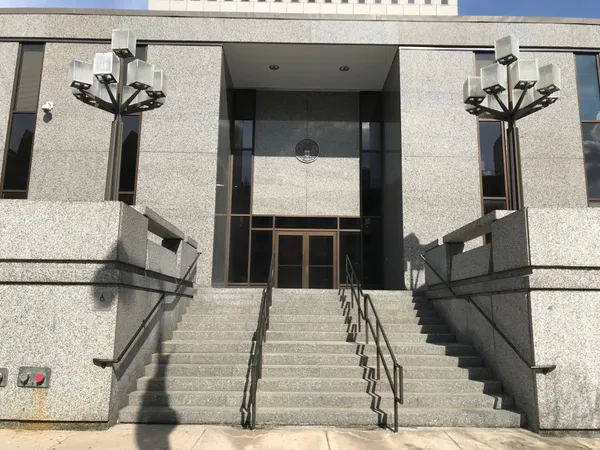
Federal building water-safety questions draw congressional scrutiny
A group of Maryland Democrats in the U.S. House is seeking detailed answers from federal agencies after reports of Legionella bacteria at the George H. Fallon Federal Office Building in downtown Baltimore, a major federal workplace that includes the regional office for U.S. Immigration and Customs Enforcement (ICE).
In a letter dated March 6, 2026, the lawmakers asked for a timeline of when Legionella was first identified, what corrective actions were taken, and how building occupants were informed. The request focuses on the building’s water management and risk controls, including whether any affected fixtures or areas were restricted and how follow-up testing was conducted.
What Legionella is—and why building systems matter
Legionella is a bacteria that can proliferate in building water systems under certain conditions, including warm water temperatures and stagnation. Public health guidance has long emphasized that risk is tied to exposure to contaminated water droplets (aerosols), and that susceptibility varies by individual health factors.
Large, complex plumbing networks and centralized cooling systems can be challenging to maintain, particularly in older structures or facilities with fluctuating occupancy. When buildings operate with reduced use for extended periods, water can stagnate in sections of piping, increasing the need for system management steps such as flushing, disinfection, and targeted monitoring.
The lawmakers’ questions center on the timing of detection, the speed and scope of mitigation, and whether communication to workers and visitors was consistent and complete.
Fallon building’s role and the practical impact on workers
The Fallon Federal Building sits at 31 Hopkins Plaza and houses multiple federal functions, making any water-quality issue potentially consequential for employees, contractors, and members of the public who enter the building for services.
Beyond immediate health concerns, the inquiry reflects operational pressures that can surface when a building’s water systems require remediation: temporary closure of restrooms or fountains, limits on showers or other fixtures, adjustments to HVAC maintenance where water-based components are involved, and possible shifts in work arrangements.
Context: recent regional focus on water safety in public buildings
The congressional action comes after a series of Legionella-related responses in public-sector facilities in and around Baltimore in recent years, including mitigation and temporary closures tied to testing outcomes. In those episodes, agencies used measures such as flushing and chlorination, followed by retesting and phased reopening.
The Fallon building questions also intersect with broader federal attention to water quality management in government buildings, including calls for faster notification to occupants and clearer procedures for responding to preliminary and final results.
What happens next
The Maryland delegation’s letter requests specific documentation about testing results, mitigation steps, and communications. Any subsequent federal response is expected to clarify whether the situation involved isolated detections, how widespread results were within the building’s systems, and what longer-term water management plan will be used to prevent recurrence.
- Timeline of detection and follow-up testing
- Mitigation actions (fixture restrictions, disinfection, system flushing)
- Worker and visitor communications, including advisories and signage
- Long-term monitoring and water management planning
For Baltimore-area federal workers, the key unresolved issues are the scope of the findings, the effectiveness of remediation, and the safeguards in place to keep building water systems within health-protective standards.