Owings Mills traveler escapes Qatar during Iran war disruptions, reaching India after overland trip to Saudi Arabia
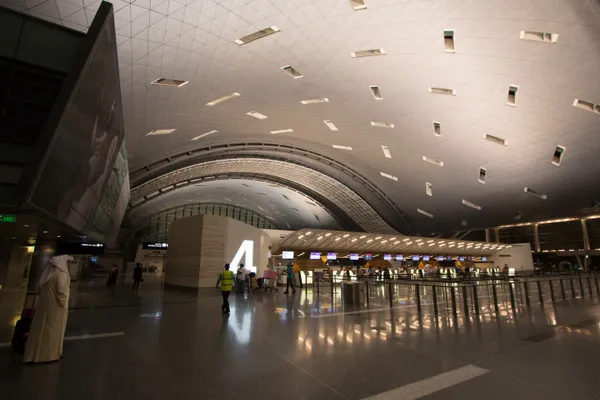
A Maryland traveler’s improvised exit route
A Baltimore County woman who became stranded in the Middle East as regional hostilities linked to the Iran war disrupted air travel has safely left the area and continued on to India, after days of uncertainty and limited transportation options.
The traveler, Anjali Sharma of Owings Mills, had been in Doha, Qatar, during a stopover en route to India for a cousin’s wedding. She said she extended her layover to spend about 24 hours in Qatar and was on a desert safari tour on Feb. 28 when she began receiving emergency alerts and returned with her group to the city.
From Doha to Riyadh: a shift from air travel to private transport
Sharma described hearing repeated explosions in Doha over subsequent nights and said Qatar’s airspace remained closed as she sought a way to depart. She enrolled in the U.S. government’s Smart Traveler Enrollment Program (STEP) and attempted to contact U.S. officials while flight options were disrupted and commercial routes were limited.
Ultimately, Sharma said she left Qatar by road, traveling by car to Riyadh, Saudi Arabia, and then flew onward to India. She characterized the departure as a rapid sequence of decisions and logistics, including complications tied to travel documentation and border crossing.
Sharma said the last 24 hours of arranging her departure were marked by shifting plans and uncertainty as she attempted to identify a viable route out of Qatar.
Assistance and the broader evacuation picture
Sharma said she sought help through multiple channels, including outreach that connected her with individuals who provided guidance for crossing the border. Her account mirrors a wider pattern reported by U.S. citizens across the region: travelers navigating cancellations, airspace restrictions and rapidly changing security conditions, often relying on private arrangements to reach operating airports.
At the federal level, U.S. officials have reported large numbers of Americans moving out of the Middle East since the start of the conflict on Feb. 28, with many returning to the United States via commercial travel and others departing to Europe or Asia. The State Department has also publicized the use of a 24/7 task force to provide security guidance and travel assistance, as well as the use of charter flights in some cases.
What travelers are being told to do
U.S. government messaging during the crisis has emphasized preparedness and self-reliance where commercial options exist, while providing contact channels for those seeking assistance. Key steps for Americans abroad have included:
- enrolling in STEP to receive security updates and official notices
- monitoring local airspace status and airline operations for changes
- using official emergency phone lines and intake processes when commercial departure is not feasible
Sharma said she reached India in time for the family event, concluding an overland-and-air route shaped by the region’s abrupt transportation shutdowns and heightened security environment.