Two Years After Baltimore’s Key Bridge Collapse, Maryland Marks Losses and Tracks Rebuild Progress
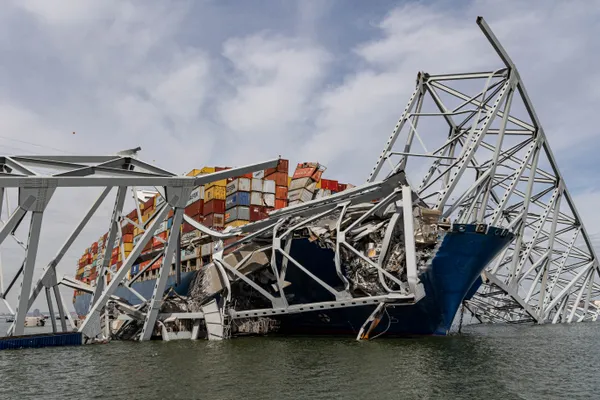
A tragedy that reshaped the region’s transportation and port economy
Two years after the Francis Scott Key Bridge collapsed on March 26, 2024, Maryland leaders, families, and first responders continue public commemorations centered on the six road workers who died when a container ship struck the bridge and sent large sections into the Patapsco River. The disaster severed a key part of the Baltimore Beltway network and disrupted freight, commuting patterns, and access routes around the Port of Baltimore.
In the year that followed the collapse, officials staged memorial events that combined ceremonial tributes with updates on recovery. Those commemorations included wreath-laying on the water and formal remarks recognizing the victims, their families, and emergency and salvage personnel who worked at the scene.
Remembering the victims
State legislative documents and public briefings have consistently identified the six workers who died during the collapse:
- Dorlian Ronial Castillo Cabrera
- Alejandro Hernandez Fuentes
- Miguel Angel Luna Gonzalez
- Carlos Daniel Hernandez
- Jose Mynor Lopez
- Maynor Yassir Suazo Sandoval
At earlier anniversary events, officials emphasized that the victims were performing overnight roadway maintenance when the collision occurred. In the months after the collapse, recovery operations ultimately located and returned the victims to their families for funeral services.
From emergency response to reconstruction planning
The bridge collapse triggered an extended response involving local and state agencies, federal partners, and specialized salvage crews. Debris removal and channel restoration were treated as priority steps for resuming maritime commerce, given the port’s role in regional and national supply chains.
Investigators have continued to examine the sequence of failures that led to the collision. A federal safety investigation has reported that the cargo ship experienced blackouts before impact, leaving it without effective propulsion and steering as it approached the bridge.
Rising cost estimates and a longer timeline
As design and preconstruction work advanced, Maryland officials revised the replacement project’s expected price and schedule. In late 2025, the state updated its projected cost range to $4.3 billion to $5.2 billion and shifted the anticipated open-to-traffic date to late 2030—an increase from earlier estimates issued soon after the collapse.
Commemoration becoming part of state policy
In 2026, Maryland lawmakers introduced legislation that would require an annual statewide proclamation each March 26 to commemorate the Key Bridge victims. The bill also outlines plans for an official state ceremony in Annapolis on March 26, 2027, formalizing an annual moment of remembrance as reconstruction continues.
March 26 remains a fixed point on the state’s calendar: a day of mourning for families and a benchmark for measuring recovery, accountability, and progress toward restoring a major transportation link.
With the replacement bridge not expected to open until late 2030, commemorations in 2026 underscore a long interval in which the region must continue adapting to altered traffic patterns and an evolving port-access landscape, while the investigation and rebuild proceed in parallel.