Two years after Key Bridge collapse, Maryland advances demolition, pilings, and permitting toward full rebuilding
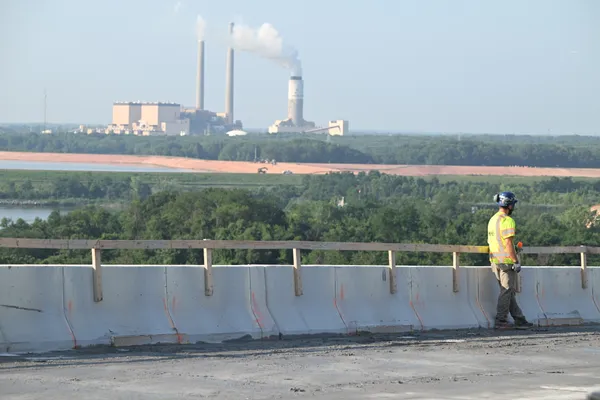
A project shifting from planning into heavy work
Nearly two years after the Francis Scott Key Bridge collapsed on March 26, 2024, Maryland’s reconstruction effort is moving from design and preparatory work into more visible construction activity on and around the Patapsco River. The project is being delivered through a progressive design-build approach, with Kiewit serving as the design-builder and the Maryland Transportation Authority overseeing the work within a broader state-federal partnership framework.
Project documents provided to state oversight bodies describe a transition marked by early work packages, expanded marine safety controls, and a permitting track intended to keep the project moving while final design decisions continue to mature.
Demolition and site clearance: removing what conflicts with the new alignment
In mid-2025, the state announced the start of demolition of remaining bridge structures, describing it as a milestone necessary to clear portions of the old bridge that interfere with the alignment of the replacement. The sequence outlined for the work begins with removal of the deck over the river, then proceeds to approach sections at Hawkins Point and Sollers Point, followed by removal of original abutments. The work is designed to dismantle and remove remaining elements while enabling parallel progress on design and foundation preparation.
Foundation work and “early work packages”
A major marker of the project’s acceleration is the use of early work packages—contracted tasks that allow field activity to begin before the entire design is complete. A Maryland Transportation Authority briefing to its board notes that early work includes demolition, procurement and installation of piles for cable-stayed span foundations, temporary access trestle work, foundation-related procurement and installation, environmental mitigation, materials testing, and construction support leasing.
The same briefing describes an amendment executed on June 4, 2025, establishing a not-to-exceed amount of $250 million for early work package activities.
Permitting modifications and environmental reevaluation
As the design advances, the state has also pursued permit modifications to reflect evolving engineering details—particularly changes tied to pier foundation design, pier protection elements, and construction trestle configuration. State communications further indicate that a reevaluation of the project’s categorical exclusion under federal environmental review will be submitted, with the expectation that environmental impacts will remain limited as the replacement stays within the existing right-of-way and maintains four-lane capacity.
- Permit modifications are expected to reflect updates to foundation and pier protection design.
- Construction staging elements, such as trestle configuration, may be adjusted to match field needs.
- Additional documentation is planned to align environmental determinations with the refined design.
Cost, schedule, and design drivers
Maryland Transportation Authority materials presented to its board in late 2025 describe an updated cost estimate range of $4.3 billion to $5.2 billion and an anticipated open-to-traffic date in late 2030. The same materials attribute the revised outlook to factors that include more detailed design development, updated pre-construction data, increased span and tower requirements to meet current bridge guidelines, added pier protection scope, and broader construction-market cost pressures.
“Groundbreaking for the new bridge is expected to occur in the coming months,” a project update to the Maryland Transportation Authority board stated in late 2025.
With demolition underway, piles and test programs advancing, and permitting updates in motion, the rebuild is entering a phase where construction impacts—marine activity, heavy equipment work, and adjacent-community monitoring—are expected to become more frequent and more visible.